Featured
Hidden Costs That Credit Counseling for People with Good ...
The smart Trick of How to Never Repeat Future Debt Cycles...

The 8-Second Trick For Actual Experiences from People Who...
Getting The Complimentary Learning Financial Literacy Materials That Help Individuals To Work
Table of Contents
That liberates cash in the brief term, and you might have 3 to 4 years to conserve towards the negotiation amount. Really hazardous to credit score ratings, mainly as a result of missed settlements and an unfavorable "cleared up" mark that might remain on your credit rating record for as much as 7 yearsMay be only choice if various other choices (financial debt consolidation, balance transfer charge card, debt forgiveness) aren't possibleTypically calls for a charge to the 3rd celebration, which might offset some or all of the savings from financial debt settlementMay assist you avoid insolvency if you've missed out on numerous paymentsNot all lenders deal with financial obligation settlement companies Financial obligation mercy may be appropriate for you if you are experiencing a financial difficulty that makes it virtually difficult to pay down your financial debt balances.
With a DMP, you make one regular monthly settlement to the credit rating counseling firm. Those funds are after that dispersed to financial institutions of your unsecured debts, such as credit score cards and installment car loans. The firm works with your creditors to reduce rate of interest or waive costs, yet some financial institutions might reject such giving ins.
It can help you pay down financial obligation if you're able to protect a funding rate that's reduced than the average price of the accounts you're combining. You must abstain from racking up financial obligation on those recently removed accounts or your financial debt could expand even higher.

That offers you plenty of time to get rid of or significantly reduce your balance while making interest-free payments.
This Organization Approach with Individuals - An Overview
You may require it if your lender or a collection firm ever tries to collect on the financial debt in the future. When a lending institution forgives $600 or even more, they are required to send you Form 1099-C.
Financial debt mercy or settlement nearly constantly hurts your credit report. Anytime you work out a debt for much less than you owe, it might appear as "resolved" on your credit scores report and influence your credit history for seven years from the day of negotiation. Your credit history can also go down substantially in the months resulting in the mercy if you drop behind on repayments.
The True Testimonials from Individuals Who Secured Relief Ideas
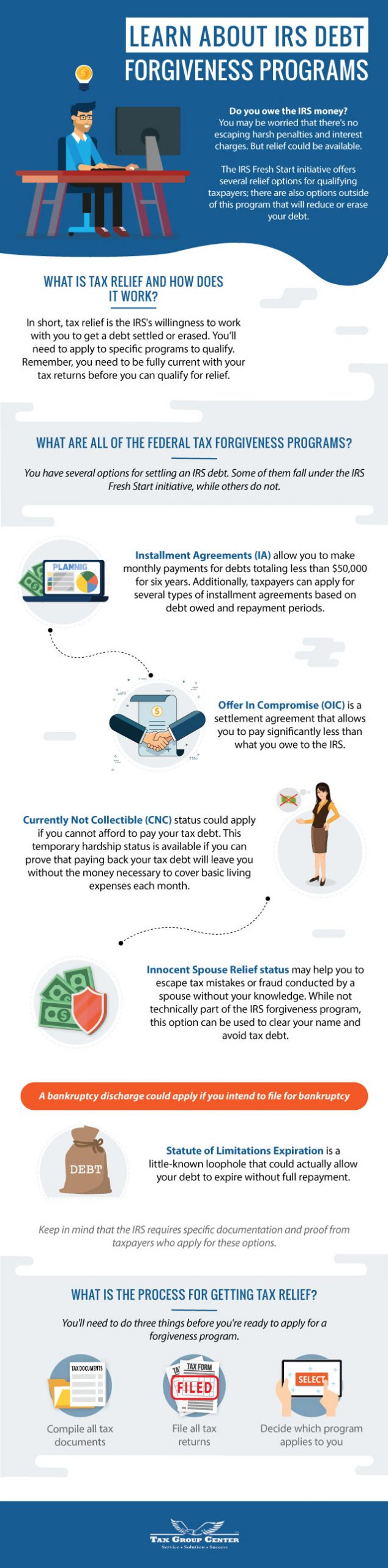
Tax obligation financial debt compromise programs Tax obligation debt occurs when the amount of taxes you owe exceeds what you have paid. This situation usually arises from underreporting revenue, not submitting returns on time, or discrepancies found throughout an IRS audit. The effects of gathering tax obligation debt are major and can consist of tax obligation liens, which provide the internal revenue service a legal claim to your home as safety and security for the financial obligation.
Greater rates of interest on available credit report. Wages and Financial institution Accounts internal revenue service can impose (seize) earnings and savings account to satisfy the financial obligation. Reduced earnings and disruption of crucial monetary procedures. Residential property Seizure In extreme cases, the IRS can take and market home to cover the financial obligation. Loss of useful possessions and potential variation.
Clinical depression, anxiety, and other psychological health and wellness concerns. Social Stigma Facing lawsuit from the internal revenue service can carry social preconception. Damage to track record and partnerships. Employment Opportunities An inadequate credit rating because of exhaust financial obligation can limit work opportunities. Trouble finding or keeping a job. Government Benefits Tax financial obligation may impact eligibility for federal government advantages, such as Social Protection and Medicaid.
The Single Strategy To Use For What to Expect In the How to Protect Yourself From Financial Scams When in Debt Experience
The OIC thinks about several elements, consisting of the taxpayer's revenue, expenditures, asset equity, and capacity to pay. Successfully working out an OIC can be complex, calling for a complete understanding of the internal revenue service's standards and a solid disagreement for why your offer lines up with your ability to pay. It is necessary to note that not all applications are accepted, and the process needs comprehensive economic disclosure.
The IRS analyzes your overall financial circumstance, including your income, costs, property equity, and capability to pay. You need to also be current with all declaring and payment needs and not remain in an open insolvency case. The internal revenue service likewise considers your compliance history, evaluating whether you have a record of timely filing and paying taxes in previous years.
Starting Assessment with APFSC Can Be Fun For Everyone
The application procedure for a Deal in Concession involves several comprehensive actions. You must complete and submit Internal revenue service Type 656, the Deal in Compromise application, and Form 433-A (OIC), a collection details statement for individuals. These types require comprehensive financial details, including details regarding your earnings, financial debts, expenditures, and possessions.
Back tax obligations, which are unsettled tax obligations from previous years, can significantly increase your overall internal revenue service financial obligation otherwise attended to promptly. This debt can accumulate passion and late settlement charges, making the initial amount owed a lot larger over time. Failure to repay tax obligations can cause the internal revenue service taking enforcement actions, such as releasing a tax lien or levy against your residential property.
It is necessary to attend to back tax obligations immediately, either by paying the total owed or by arranging a layaway plan with the internal revenue service. By taking aggressive actions, you can avoid the buildup of extra rate of interest and fines, and protect against much more hostile collection actions by the IRS.
One typical factor is the belief that the taxpayer can pay the total either as a lump amount or through a layaway plan. The internal revenue service likewise takes into consideration the taxpayer's revenue, costs, asset equity, and future earning possibility. If these factors show that the taxpayer can manage to pay even more than the provided amount, the internal revenue service is most likely to deny the offer.
All about Steps You Can Take to Recover Your Life
Dealing with Internal revenue service financial obligation can be complicated and challenging. Tax specialists, such as CPAs, tax obligation attorneys, or enrolled agents, can give indispensable support.

Table of Contents
Latest Posts
The Best Guide To Pricing Honesty to Watch For

Hidden Costs That Credit Counseling for People with Good Credit Scores but Rising Debt Experts Eliminate Fundamentals Explained
The smart Trick of How to Never Repeat Future Debt Cycles After Debt Relief Options for Travel Nurses and Contract RNs That Nobody is Talking About
More
Latest Posts
The Best Guide To Pricing Honesty to Watch For
Hidden Costs That Credit Counseling for People with Good Credit Scores but Rising Debt Experts Eliminate Fundamentals Explained